
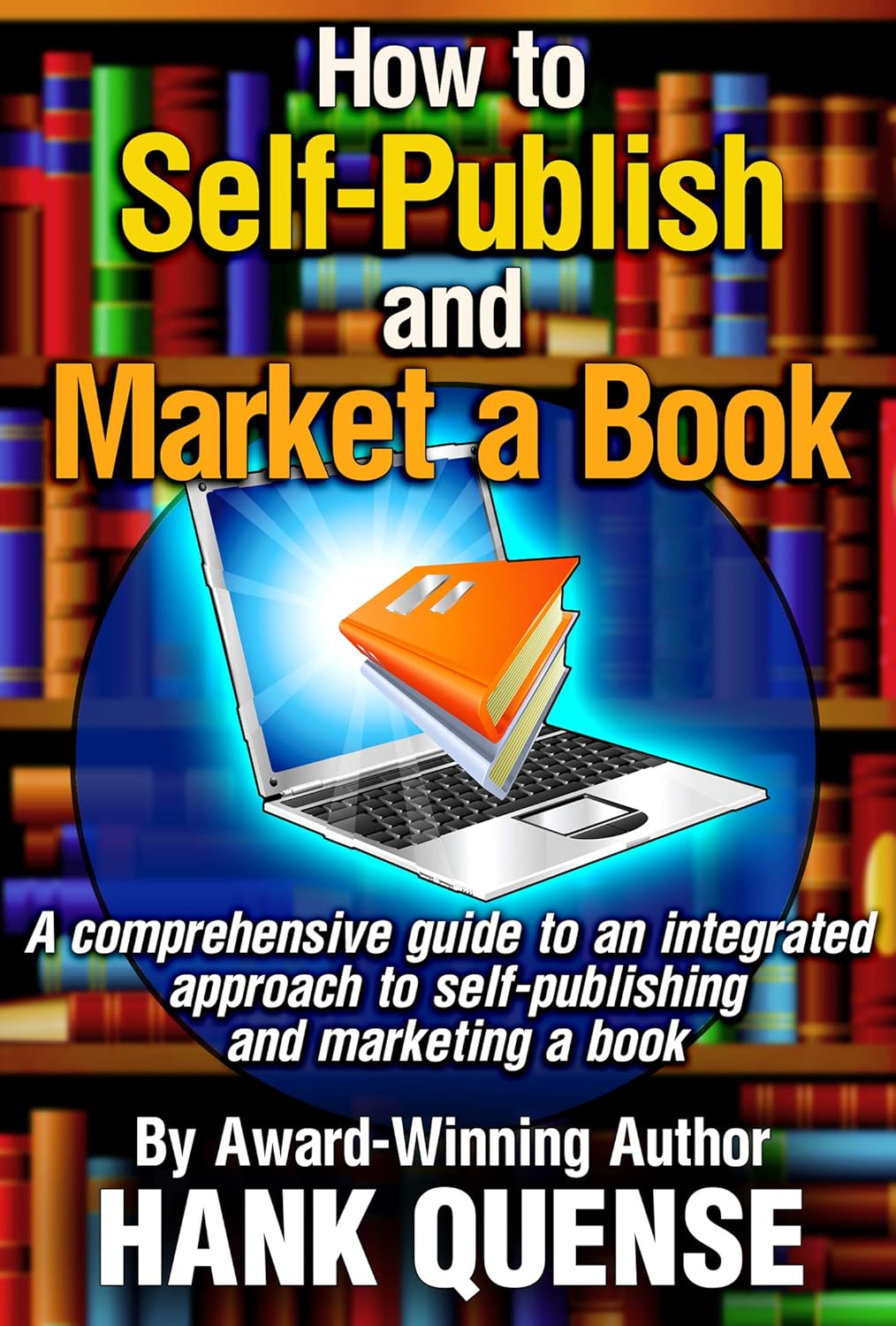
How to self-publish and market a book
Finalist in 2020 Booklife Non-fiction contest
Are you considering self-publishing your first book? Naturally, you have questions and concerns? This book has your answers. It integrates both the publishing and the marketing to provide you with a complete project plan to market your book while you publish it.Most books on publishing deal with publishing by itself. Most books on marketing deal with marketing as a stand-alone project. I think there is a better approach. Publishing and marketing should be considered as an integrated project. That is what this book does: it treats publishing and marketing together to create a complete project plan.
The self-publishing pain points addressed include:
Formatting
Book layout
Editors
Covers, generic and otherwise
And more
The marketing pain points include:
Social media platforms
Blog tours
Creating buzz
Email campaigns
Keywords
And more
Related products
-
Self-publish a book in 10 steps
Finalist in 2020 Booklife Non-fiction contest
Are you considering self-publishing your first book? Naturally, you have questions and concerns? This book has your answers. It integrates both the publishing and the marketing to provide you with a complete project plan to market your book while you publish it.Most books on publishing deal with publishing by itself. Most books on marketing deal with marketing as a stand-alone project. I think there is a better approach. Publishing and marketing should be considered as an integrated project. That is what this book does: it treats publishing and marketing together to create a complete project plan.The self-publishing pain points addressed include:
Formatting Book layout Editors Covers, generic and otherwise And moreThe marketing pain points include:
Social media platforms Blog tours Creating buzz Email campaigns Keywords And more -
Business basics for authors
Do you have a published book? Do you know you now own a business? "Business Basics for Authors" describes the operations required to run your book business The book is written in plain English, not business techni-babbleOnce you have a book published, you own a business.The purpose of the business is to market and sell your book. The implication is that you, the author, can't make ego-driven decisions: the decisions must be business-driven. While you'd rather be writing another book, still, you have to acquire the basics of operating a business.Just because you now own a business doesn't mean it has to be complicated. It's a matter of understanding the business issues involved. In this book, you'll learn: * Business basics * Tax issues * Budgeting * Profit & Loss * Additional resources * What other authors sayHank Quense is the author of more than 25 books, both fiction and non-fiction. He founded Strange Worlds Publishing as his own imprint. For many years, he has practiced the business principles described in Business Basics fo Authors.Learn how to run your book business today!Click on the "Buy Now!" button! From the author of Book Marketing Fundamentals and How to Self-publish and Market a Book. -
Beginner’s Guide To Creating Genuine Characters
Creating a fictional character that gabs the reader's attention is a difficult task The Beginner's Guide to Creating Genuine Characters makes the task much easier. Filled with information and examples from books and movies, this Beginner's Guide is targeted to writers who are just starting to write their first story. A story, whether it be a short story, a novel or a screenplay, is about the characters and their journey from the beginning of the story to the climax. Inexperienced fiction writers struggle with character development. To overcome their inexperience, they need guidance and examples and that is what this book is about: showing writers how to develop their characters. The ebook uses artificial intelligence to generate reports on what makes a character 'great.' It also uses AI to generate what makes specific characters from literature and movies 'great.' -
Fiction Writing Insights
Do you want to strengthen your fiction writing skills? In this ebook, an experienced author discusses issues that are rarely covered in books on fiction writing. It will provide insights that will improve your craft skills Learn why you need to defuse tension. Learn how to nest subplots. Understand the biggest problem with world building. And more. Hank Quense has had over 40 short stories and a dozen novels published. He shares his insights with you in this unique ebook. The book contains eleven topics covering a gamut of fiction writing issues. Improve your fiction writing skills. Grab a copy now!


There are no reviews yet.